
Top 3 customer experience (CX) trends for banking in 2023

Customer experience (CX) management is the defining competitive differentiator in today’s banking industry, infact for good reasons: financial institutions that invest in customer experience have higher referral rates, higher share of portfolio, and are more likely to increase cross-selling of products and services to their customers.

From Consulting C3 (MST Group), we help our clients to increase profit ranges in such a demanding market as the financial one.

The challenges we have identified in the short term are as follows:

  1. Focus on the human connection: Optimizing processes through digitalization puts at risk customer satisfaction in interactions with their bank. Although it is true that digital options improve the experience of a certain group of users, financial institutions should not forget the need for the human touch to positively impact customer satisfaction. The most appropriate communication channel to provide personal touch is the contact centers through which the human to human interaction is developed. During more than 30 years of experience in that sector, we have helped our clients to improve their satisfaction indicators, accompanying them in the processes of continuous improvement and to design based on a Customer Centric methodology.
  • Big data in the customer experience: Customer intelligence combines technology, accumulated and ordered customer information and artificial intelligence. Information management and data interpretation is one of the greatest assets for making decisions about processes, products and communication channels to engage with customers. Customer intelligence allows financial institutions to anticipate needs and be able to predict the future behavior of their customers. From Consulting C3 (MST Group), we develop both the technology and the consulting support to guide our clients in the decision making process and in the investment of resources oriented to CX.
  • Hyper-personalization: It has been noted over the years, in the Customer Experience trends, how hyper-personalization can also benefit banks. Thanks to tools like big data, the aim is to offer customers products based on their interests, through prior analysis and the use of predictive techniques. This approach makes it possible to increase the well-being of their customers. The analysis of correctly ordered and correlated data makes it possible to target each customer in a specific way. As well as to take action not only reactively but also to anticipate needs based on the socio-cultural characteristics identified. In summary, to create customized solutions that provides value for that particular client.

From Consulting C3 (MST Group), we have helped our clients to obtain important improvements in the main indicators such as NPS (Net promoter score), valuation of service excellence, loyalty, increase in turnover, cross-selling and recommendation (cost savings in marketing actions).

Consulting C3 (MST Group), provides the tools and the methodology to impact the quality indicators and the business ratios of our clients in the banking sector. This is possible through the projects of perceived quality and quality assessment issued. Hence, we give to our clients a roadmap with high impact actions verifiable in short periods of time. Finally, banking services should be geared towards improving people’s lives and, to this end, institutions should be open to active, permanent and high-value listening to their demands. Therefore, to know and understand the behavior and needs of their customers will generate, in the short and medium term, a competitive advantage in an increasingly demanding market.

New warranty law, consumers applaud extension of warranties from 2 to 3 years

The warranty period for products increases from 2 to 3 years for products sold as of January 1, 2022, and manufacturers will have to insure spare parts for their products for 10 years, and not for 5 years, as until now. This is to improve the useful life of products, by facilitating repair. This is good news for consumers.

Extending the availability of spare parts to 10 years is in line with the European Consumer Agenda and will facilitate the ecological transition to more sustainable consumption.

More warranty, more rights

All consumer durables had, by law, a two-year warranty. In addition, manufacturers were obliged to guarantee the existence of parts for repair for at least 5 years from the date on which the product stopped being manufactured.

The new regulation extends these periods:

  • The legal warranty for products becomes 3 years.
  • The obligation to maintain the existence of repair parts and an adequate technical service is extended to 10 years from the date on which the product ceases to be manufactured.

Other deadlines that have changed is when a customer will have the right to choose between repair or replacement of the product. The non-conformity period has been extended from 3 to 5 years and the period for proving non-conformity with the purchased product has been extended from 6 months to one or two years, depending on the product.

A three-year warranty for cell phones, household appliances, televisions and other electronic products… It remains to be seen how the market reacts and whether the extension of the warranty will have an impact on product prices.

This series of measures have been incorporated into Spanish law by the transposition of the European Directive (EU) 2019/771 of 20 May 2019, following the European Consumer Agenda’s commitment to sustainability and distribution of consumption.

Some of the affected sectors have the opinion that Spain has exceeded in the transposition of the Directive, especially in reference to repair parts because it has unilaterally established this excessive period of 10 years.

In the same vein, some critical opinions consider that these modifications have been considered only one component of the legal business: the consumer. Companies are forced to assume new contracting conditions with the consequent cost that this warranty period involves: having stock, repair parts and adequate technical assistance. Thus, with these new regulations, technical assistance services are now more important than ever and must be able to keep up with the new measures. This has a direct impact on the activity of Technical Assistance Call Centers (HelpDesk), which must ensure that they provide a quality service according to the circumstances.

At MST Holding we have been experts in HelpDesk services for more than 30 years. We are a flexible company with a great capacity to adapt to the needs of our most demanding customers.

For more information please contact us at marketing@mstholding.com or through our website www.mstholding.com.

Get ahead of the cold with MST Holding and request a review of your heating system now

A complicated winter is announced. The war in Ukraine and the energy crisis are making the supply of electricity and gas more expensive, to the extent that it could be compromised in Europe. From Brussels, the European Commission urges member states to apply measures that contribute to reducing energy demand. In Spain, the Executive power has approved its Energy Savings Plan –waiting for it to be processed as a bill– with which it intends to reduce energy consumption and, at the same time, the economy of consumers.

The text includes, among other measures, an extraordinary review of boilers and thermal installations before December 31, 2022 -if the last one was carried out before January 1, 2021-. In this way, it is expected to reduce the number of incidents during the winter, in addition to to do a stricter control over the demand for energy resources.

The winter looks uncertain in terms of energy. Consumers will feel the effects of this long-lasting crisis in their pockets. Any measures they can take to reduce their demand will also benefit their economy. Therefore, in case of having a gas boiler -or thermal installation in the communities of owners-, it is useful checking and cleaning while it is still warm and before its ignition, because when switched off it is easy to access and maintenance.

At MST Holding, we are experts in Customer Service for HVAC companies. Prepare your Call Center for cold season call peaks with our help. While handling a higher call volume can be hard, at MST Holding we arranged with keeping customers satisfied.

Even in the most stressful times of call volume, customers expect great service. At MST Holding we have specialized and trained teams ready to help customers when they need it most. These busy times will not disrupt your business, but will increase customer loyalty.

From MST Holding we also point out the importance of all these actions being carried out by an approved professional or a technician provided by the manufacturer, who follows the manufacturer’s specifications.

Healthcare Success Story: Improving Customer Experience

MST Holding has its quality division Consulting C3. This is a Business Consulting firm specialized in measuring and improving the customer experience, optimizing the technical and human resources of your organization.

The extensive experience acquired in the sector by C3’s team of professionals, after twenty years of professional development in the field of Customer Service Consulting, has allowed us to develop and apply quality solutions in various methodologies.

Below, we detail the great work that our specialist consultants are currently carrying out with an important client in the Healthcare sector. This project covers different aspects and methodologies.

Client’s problems and initial situation:

The Client’s Help Desk service attends to the needs arising from the use of machinery for clinical analysis, hematology, serum, etc… by different hospitals, clinics, pharmacies and medical centers around the world. The Help Desk service covers the whole of Spain and Portugal.

Customer problems are innumerable, but they are usually related to specific or hidden dysfunctions of the devices, errors in reading results, configuration errors, etc… The Customer attends incoming calls from customers who have these problems (doctors, pharmacists, laboratory technicians, etc…) through a call center formed by technical experts in different fields, from biomedical and microbiology to IT, who try to solve the incidents remotely. This team is reinforced by different field technicians who deal with incidents requiring on-site assistance.

ConsultingC3 obviously does not intervene in its monitoring work in the assessment of any technical aspect. The functions of Consulting C3 are focused on ensuring the internalization and continuous improvement of communication skills by Help Desk agents in order to achieve the objective of ensuring a high level of excellence in telephone customer service from this group, offering a company image in line with the values and quality level stipulated by the Customer.

Solution provided by MST

For this purpose, according to the standard (SLA) designed by the Client, ConsultingC3 has created a decalogue of competencies and communication skills through which the agents must structure and direct the interaction with the client.

To implement this solution, ConsultingC3 carried out at the time (and continues to do so every year, at least twice, with new agents) an initial training or onboarding, through which Help Desk agents are instructed both in the quality standard required by the Client, as well as in the specific skills and abilities described in the decalogue.

In addition (and this is the most difficult part), the teams are made aware of the impact that the mastery of these skills and competencies has on the quality delivered by the Organization and on the image offered by the company.

To ensure an excellent level of quality delivered by the agents, ConsultingC3 works with the Client at different levels. These are:

Three complete audits are carried out in the period of one year, through which we assess the level of excellence that each agent shows in each period (quarterly) with different objectives:

1. To know the level of each agent.

2.         To detect areas of improvement individually.

3.         To obtain traceability on the progress of each agent, of each technical specialty team and of the service as a whole.

To this end, a series of recordings of real calls attended by the agents (inbound) are listened to within each period, reporting the quantitative and qualitative assessment of each competency in each of the audited calls and in each of the agents, and producing a final quantitative and qualitative report for each agent in each period.

Once the audits and the quantitative and qualitative reports have been completed, and focusing on the objective of ensuring continuous improvement, we schedule individualized coaching and/or mentoring sessions with each of the audited agents to detect blockages and jointly seek or propose solutions to ensure the agent’s progress in each competency, also on a quarterly basis, accompanying each audit period.

Finally, the quantitative and qualitative results are transferred to the Line Manager or Managers of each line (teams) at three levels: individual (of each agent), team (or line) and global. It is also accompanied by a general analysis and a competitor-by-competitor analysis, as well as suggestions for improvement.

Quantitative and qualitative results after implementation of the MST solution

Since Consulting C3implemented these actions, the results have been improving progressively in the order of 3% to 5% per year in the perception of the quality issued; the agents have gained in competence level, increasing their quantitative and qualitative results annually (in the vast majority of cases) and gaining in security and personal satisfaction, especially through the coaching sessions, which are highly appreciated by all the agents.

Currently, the quality index issued by this service stands at 91.73% overall average.

SEASONALITY OF THE SERVICE IN THE HVAC SECTOR

Within the Call Center world, SEASONALITY is understood as those changes that a call reception service undergoes depending on the time of the year or period of time in which it is located. This variation in the volume of calls received is repeated annually, weekly or daily. At MST Holding, we are specialists in the planning of services with a high seasonality such as those of the HVAC sector.

Minimizing the inconveniences that can occur at times of seasonality in a service, always maintaining a channel of contact with the customer and ensuring their satisfaction, places MST Holding as one of the leading companies in the HVAC sector.

Knowing how to provide good customer service in the most difficult moments is to turn your customers into ambassadors of your brand.

More information at www.mstholding.com or marketing@mstholding.com

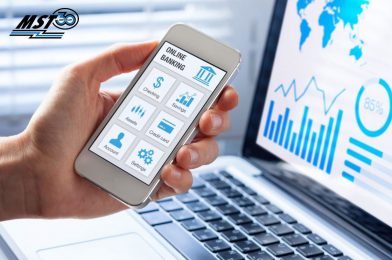
Guiding banking consumers toward digital self-service

Any service that can be delivered online is technically a digital service. And banks have clearly not been lagging behind in the delivery of digital services. For some time now, they have started to respond to customer self-service demands as well.

But what exactly is self-service? Well, many customers prefer to carry out transactions and other types of procedures on their own, without the need to queue at the bank or visit during opening hours. That is why there are self-service models. A case in point would be ATMs, which allow cash withdrawals even when the bank is closed. But in the digital realm, self-service is somewhat different.

In addition to being able to make transactions at any time of the day, the goal of digital self-service is to answer queries or questions instantly. Artificial intelligence is one of the technologies that makes this possible. Therefore, it is a key element in the future of customer service and customer experience.

That is why chatbots have become an essential service.

Banking has undergone multiple transformations since the advent of the Internet. And chatbots for banks have been one of these instruments that have gradually transformed the industry.

The banking industry’s commitment to integrating technology has been clear:

– Automate simple tasks.

– Reduce service times.

– Facilitate customer self-management.

– Decongest the physical headquarters of banks.

This last point has become particularly relevant in recent months.

Chatbots in banking can help streamline transactions such as money transfers and account balance checks through a conversational interface that guides customers through their actions. On the other hand, they can also facilitate access to banking information and answer frequently asked questions from any page on a bank’s site, while providing personalized information as they leverage customer data to suggest recommendations and advice to customers in an automated manner.

With these features, there are many actions that customers can take without the help of a human agent, such as receiving bill and payment notifications, receiving fraud and suspicious activity alerts, transferring money, checking their balance, or reporting stolen cards, to name a few.

In addition, customers can instantly access resources and answers to their questions without having to wait for the call to be transferred to a representative. According to recent research, chatbots save more than 4 minutes per conversation within the banking industry.

Another function is to enable customers to manage requests quickly and efficiently while acting as a listening channel so banks can better understand user habits, anticipate customer actions, and provide personalized offers and services. By contextualizing products and services, banks increase customer loyalty.

Employees also benefit from chatbots, as they reduce operational costs, minimize human error and save agents time on repetitive queries so they can focus on acquiring new knowledge and skills. According to a Juniper study, chatbots will save banks up to $7.3 billion globally by 2023, allowing them to compete with other branches and implement a successful digital transformation.

In short, chatbots will not replace human agents. In fact, by automating standard procedures, human agents will have to focus on more demanding issues. However, chatbots can seamlessly escalate queries to agents and provide them with all the necessary data previously communicated by the customer for the agent to resolve the issue as quickly as possible and without asking the customer to repeat any information.

The banking industry is full of possibilities when it comes to incorporating chatbots to interact with customers and help them with their transactions. The different ways of using them in banking services represent a benefit for both you and your customers.

If you don’t already use chatbots, we invite you to test how they can provide a better banking service to your customers. Contact us at marketing@mstholding.com / www.mstholding.com

WE TALK WITH A CARTERIZED MANAGER FROM THE HEALTHCARE SECTOR

Currently, the figure of the Carterized Manager in the Healthcare sector is a fundamental piece in the competitive strategy of any manufacturing company or distributor in the pharmacy channel.  Not only because of the profitability and volume of business it generates, but also because of the added value it brings to the client.

At MST Holding we wanted to get to know a little better the day-to-day work of the Carterized Manager and we have conducted a short interview with one of them, which you can read below:

1. The main challenges you face in your day-to-day work.

We have quarterly objectives and every day I try to reach them, and always be positive, you can not slow down the pace of work to avoid surprises and to reach the goal set by the client.

Not to fail the client is my main challenge.

2.            How many clients do you currently manage and what is the volume of business.

That depends on the number of pharmacies we call, but we handle approximately 30 orders a day, and if we are unable to contact them, we make sure we keep calling them so we don’t lose a sale.

I have an agenda to keep track of customers and thus organize the rotation and needs of each customer.

The volume of business depends a lot on the type of order and product we are dealing with, it is not the same an order of exclusive medicines that are very expensive than an order for example of dressings or dermo-aesthetic products where the average order is already lower. But normally we work with a demanding volume of work and the sales amounts are usually approximately 2.200€ of average order (with the exceptions that I have mentioned).

3.            Differences between your current position and your previous sales roles.

The difference now with my previous jobs, is that the previous ones have always been face-to-face and the current job of portfolio manager is that I handle everything by phone in teleworking mode. Another important difference is that now I have a portfolio of clients and in my previous jobs I also had one, but I also had to reach a prospecting quota, that is to say to make new clients every month.

4.            As a sales expert, what do you like most about being a Carterized Manager?

Personally, I love dealing with the public and the figure of the Carterized Manager allows me to have a closer and more informal relationship with customers. I also like challenges and testing myself by always surpassing the objectives set by myself, it is a way to stay motivated. I can manage a large number of pharmacies on a daily basis and this is a great challenge for me. I consider this to be a very important sector and I find it very rewarding to be able to contribute my experience and knowledge.

5.            What personal success story are you most proud of?

In the last laboratory I worked in, it was quite complicated since everything, or almost everything, was prospecting and I opened many pharmacies from the list. One of them was in a center (I can’t say the name due to confidentiality!) where I had already tried several times to create a contact (other colleagues and even my boss) without success. Finally, I was able to place an order with them and thus create customer loyalty by opening a space in their pharmacy. This is a laboratory that is not very well known and I positioned myself alongside the rest of the laboratories with a recognized name. It was a great personal satisfaction.

If you want to know more about Gestor Carterizado you can contact us at: marketing@mstholding.com

How to improve customer care in healthcare in 2022

Customer care has been changing in recent years. And although we usually believe that these changes are limited to sectors such as the technology industry or telecommunications, the truth is that customer service in the health sector has also been transformed. At Consulting c3, as a consulting area of the MST Group specializing in this sector, we encounter common cases in people who perform customer service functions in healthcare.

The changes are significant and it is good to know them in order to understand the new trends in the field of Customer Experience (CX) in Heathcare. So what do our consultants encounter when they carry out a project in the Healthcare sector? Here they tell us.

In terms of training, Consulting C3 works in 3 areas in the Healthcare sector:

– Training

– Coaching of agents

– Agent mentoring

What problems do we usually encounter?

At first sight, we do not detect specific problems different from other sectors, since we are talking about services that are technically very similar. But we can speak of very specific characteristics inherent to the sector, such as:

Medium-high level clients: both in terms of academic, educational or educational preparation, as well as in terms of economic level or purchasing power.

Criticality: the healthcare sector, in general, is critical, so that customers’ perception of their problems or incidents is that they are a priority.

Specific technical preparation: the agents who deal with incidents from a helpdesk in the healthcare sector must be specialists in the specific subject; that is, they require a higher technical-academic preparation and have this differentiation with respect to the usual Customer Service agents. In other words, they are technical specialists who serve customers.

Most common weaknesses of agents in the Healthcare sector

The most particular weaknesses of these agent profiles are:

a.            Category mindset: they do not see themselves as Customer Service agents, but rather as senior technicians in a specific medical or health-related specialty, which makes it difficult for them, on occasion, to adopt the different communicative styles classically proposed by a Customer Service, for example, making a corporate greeting and closing the call.

b.                           Purely technical mindset: as the people of science that they are, it is very common for their profiles to stand out for their ability and focus on resolving the issue, giving little importance to the need to develop communication skills.

c.            Generation gap: most helpdesk agents are Millenials and there is a certain natural resistance to using politeness formulas that they consider outdated.

How does Consulting C3 manage all this?

– By helping them, first of all, to internalize the need to acquire, develop and improve communication skills in the telephone environment, since this is the means by which they will be able to technically resolve incidents.

– Enhance the necessary communication skills. In order to approach high-level clients, it is important that they always take into account to offer a professional image, through a polite, formal and professional language, which will help them to be more credible and to be at the same technical level. To address criticality, it is important that agents show confidence at all times, even when they are unsure of the resolution, so it is necessary that they consciously avoid any expression of doubt. Contrary to popular belief, consulting or handing over the call to another department is a sign of mastery, not weakness, similar to the referral a doctor may make of a patient to a specialist.

– Regarding the category mindset, it is a matter of orienting agents towards the vision of the value they bring from the telephone environment.

– The generation gap, although not present in all cases, is worked with training, with concrete practical cases, through, for example, the exercise of listening to their own calls, putting themselves in the customer’s place, trying to understand the impact that courtesy and formality, as well as a high level of language, generates in the level of customer satisfaction, and, obviously, with constant accompaniment and constructive feedback from ConsultingC3 Consultants.

People skills do not come naturally to everyone. Some people have high emotional intelligence and others less so. Therefore, training is critical to bridge this gap and provide all employees with the skills they need to deliver excellent customer service.

Customer experience is crucial to any business in the modern world, but this is particularly true in healthcare, where a good experience can mean a huge improvement in a person’s quality of life.When it comes to delivering an excellent customer experience to patients, these are the things that can make a significant difference.

If you would like to learn more about this topic you can contact us at marketing@mstholding.com or at www.mstholding.com.

How to improve B2B sales based on data

Omnichannel and personalization have become the two major factors that determine B2B (“business to business” or business-to-business) sales, according to the report “The Global Pulse of B2B Business” by the consulting firm McKinsey& Company. Added to this scenario is the trend that has been consolidated in recent years in B2B relationships and sales: data-driven decision making.

The study dictates that these businesses are in full transformation and customers are changing the way they interact, placing greater importance on flexibility through channel adoption and finding more personalized and seamless buying experiences. “They are better positioned to meet their customers’ expectations, improve business performance and achieve a step change in their growth,” notes McKinsey. This goes hand in hand with a survey by Forrester that revealed that 41% of shoppers believe analog channels have become less important than digital. It should be noted that the pandemic has also caused this process to accelerate.

This means that, today, companies that do not provide their teams with the necessary tools to work more efficiently and productively, such as access to new technology platforms or improved data access, have a clear problem. With respect to omni-channeling, it is worth noting that 72% of B2B companies that sell through seven or more channels increased their market share. This new omni-channel standard translates into the use of ten by more channels in three interaction models.

The Value of Data in B2B Sales

The rise of virtual selling has meant that B2B sales-focused organizations are increasingly willing to use the latest technologies to support their strategic decisions on data.

According to a Gartner study, by 2026, 65% of B2B sales organizations will move from the traditional model of intuition-based decision making to a data-driven plan. The goal is to leverage technologies that are able to bridge workflow, data and analytics. In addition, due to the modernization of virtual sales strategy they will be able to create a support designed to improve customer engagement, support salesperson actions thanks to data and simplify salesperson workflows.

Given the importance of data, Gartner experts recommend that organizations evaluate two types of B2B transactions:

– One based on volume and velocity, in which sales cycles are shorter (less than three months), are related to smaller deals (less than $25,000), with a small buying committee, consisting of fewer than six stakeholders, and generally for products of less complexity.

– Another model of larger businesses running for longer periods, six months or more, with larger deals, which can be over $125,000, have a purchasing committee of between eight and 11 stakeholders, and are typically for complex products.

Simplify workflows

Automating routine tasks that consume a lot of salespeople’s time is essential. This will allow them to focus on more important tasks and thus improve their performance, leaving the more mechanical tasks aside.

www.mstholding.com

Optimize the average time of your customer calls

Spending time with each customer is essential to offer a good service and to go deeper into their needs and solve their queries. However, we can find ourselves in the case of calls that are too long and do not solve the customer’s problems.

When we talk about average talk time, we are referring to the amount of time an agent spends talking to customers. In any case, this time should not be confused with the average interaction time, which corresponds to the total time an agent spends completing a call from start to finish.

In general, conversation time alone does not tell much when analyzed on its own. What is important is the percentage of speaking time, as a share of interaction time. Ideally, the majority of interaction time should be spent talking to the customer, not the person waiting or the agent doing back-office tasks.

Average contact center talk time

For example, high interaction time and low speaking time indicates inadequate staff training or inadequate call routing. We cannot keep customers waiting to be served or transferring them from one department to another to resolve their questions or queries.

In addition, a low interaction time and a low talk time indicates that calls are not being handled correctly because the times are too short.

On the other hand, a high interaction time and low talk time could mean that agents are trained but call center technology is not adequate and systems are limited.

How to optimize the average talk time?

The first thing to consider is to decrease the interaction time. This reduction will allow us to handle more calls with the same number of agents. In this case, the most difficult thing is to find the balance between agent productivity and efficiency.

– Call audits to drive improvements

By analyzing all conversations and comparing which ones have the longest talk times and the most frequent problems that arise, essential information can be generated to improve the average talk time.

– Simplifying agent effort with technology

Agents are only as fast as their knowledge allows them to be. It is important that when agents are not proficient in product features or specific problems, there is a knowledge base to guide their responses.

Other metrics in the contact center

Talk time is an interesting metric for trying to find problems in contact center call handling. However, as with any other metric, the goal should not be to have the highest or lowest talk time, but to understand what it means for the customer experience.

It can also be useful to compare interaction time and talk time with competitors. These types of mystery calls allow you to see where a company stands against its competitors and compare key metrics to recognize trends, correct mistakes and uncover opportunities to improve the customer experience.

If you need professional help, at MST HOLDING we offer you our experience and services. Contact us at www.mstholding.com

Exit mobile version