The SAC Law in the Financial Sector: Understanding the Nuance That Changes Everything

The entry into force of the new Customer Service Law (SAC Law) has opened a new chapter in the relationship between companies and their customers. However, in the financial sector, its impact cannot be interpreted in the same way as in other industries.

And that is precisely where much of the confusion begins.

While in other sectors the SAC Law acts as the main regulatory framework, in financial services its role is different. More technical, more constrained, and above all, more dependent on the existing regulatory environment. For this reason, the key lies not so much in what the law says, but in how it should be interpreted within this specific sector.

A Law That Does Not Replace, but Complements

The first point that needs to be clarified is that the SAC Law is not the primary regulation in the financial sector. Its role is supplementary.

This means that sector-specific regulation (covering transparency, customer protection, and the functioning of complaint handling services) remains the priority. The law itself makes this clear in Article 2, where it defines its scope and establishes that sectoral regulation prevails over the general framework.

In practical terms, this means that the SAC Law only comes into play where financial regulation does not already cover a specific aspect. It does not replace what already exists; it complements it.

This nuance is critical, as it fundamentally changes how the law should be approached. The objective is not to “implement the SAC Law” as a standalone framework, but to understand how it fits into an already regulated (and highly demanding) model.

A Deeper Impact Than It May Seem

Despite its supplementary nature, the impact of the law on the financial sector is significant. This is because it does not merely complement the existing framework; it also modifies it.

Specifically, the SAC Law introduces changes to Law 44/2002, strengthening the requirements for customer service functions. This results in increased expectations around accessibility, service quality, and personalization.

For example, there is now a stronger obligation to ensure that customer service is:

  • accessible to all customer profiles
  • delivered by human agents when required
  • adapted to vulnerable groups

This is not a change in the model itself, but it clearly raises the bar in terms of execution.

The Exclusions: Understanding What Does Not Apply

One of the most relevant (and most frequently misunderstood) aspects of the law concerns the articles that do not apply to the financial sector.

The law explicitly excludes certain provisions, including Article 13.8 and Articles 18, 19, 21, 22, and 23. However, beyond simply listing them, it is essential to understand what these articles regulate and why they are excluded.

For instance, Article 22 establishes the obligation to conduct an annual external audit of the customer service quality system. While this is a key requirement in other sectors, it does not apply in financial services because such controls are already in place through sector supervisors and internal compliance frameworks.

A similar situation applies to Article 21, which regulates service quality evaluation systems, and Article 18, which requires the implementation of customer satisfaction measurement systems. In the financial sector, these mechanisms are already embedded within the operational and regulatory model.

Article 19, which promotes collaboration with consumer associations, and Article 23, which defines the general sanctioning regime, are also excluded because the financial sector already operates under its own supervisory and enforcement system, managed by institutions such as the Bank of Spain or the CNMV.

Even Article 13.8, which regulates the suspension of services when a complaint escalates to external bodies, is excluded, as these processes are already specifically defined within financial regulation.

The conclusion is clear: these aspects do not disappear; they are already covered under a different framework —and that framework remains the primary one.

What Still Applies… with an Adapted Interpretation

Alongside these exclusions, there are other provisions that do remain applicable, although always subject to sector-specific regulation.

This is the case with Article 4, which defines the general principles of customer service, stating that it must be free of charge, accessible, inclusive, and effective. It also includes Article 13 (in its applicable sections), which requires that complaints be resolved with clear, reasoned, and comprehensive responses that address all issues raised by the customer.

These provisions reinforce the model, but they do not replace it. In the financial sector, they must always be interpreted under the principle of specialization: if there is any conflict, sector-specific regulation prevails.

A Model That Was Already Strong… Now Under Greater Scrutiny

The financial sector does not start from scratch. For years, it has operated with a structured customer service model built around multiple layers.

There is a first level of service, more operational in nature and linked to branches or commercial channels. A second level, consisting of formal customer service departments responsible for handling complaints. And a third level, represented by sector supervisors.

The SAC Law does not alter this structure. What it does is reinforce it, introducing greater rigor in service quality, complaint traceability, and customer protection —particularly in cases involving vulnerable individuals.

Beyond Compliance: Operational Consistency

The real impact of the law lies not in theory, but in day-to-day operations.

Financial sector contact centers will need to evolve toward more consistent models, where quality is not measured solely through SLAs or processes, but through the consistency of the customer experience. Where personalization is no longer a differentiator, but a structural requirement. And where channels and service levels operate as a fully integrated system.

The challenge is not to add more layers, but to ensure that everything works together more effectively.

The Key Lies in Interpretation

In this context, the greatest risk is not non-compliance —it is misinterpretation.

Applying the SAC Law as a general framework can lead to duplication, inefficiencies, or even conflicts with sector-specific regulation. On the other hand, understanding its supplementary nature allows it to be integrated logically into the existing model.

An Opportunity to Raise the Bar

Beyond regulatory compliance, the SAC Law represents an opportunity to further professionalize customer service in the financial sector.

It is not just about complying —it is about doing so with judgment.

At MST, we work precisely at this intersection between regulation and operations, helping organizations translate complex regulatory frameworks into robust, efficient models aligned with real customer needs.

Because in this new scenario, the difference will not be made by those who simply know the law.

It will be made by those who know how to interpret it… and apply it with purpose.

www.mstholding.com

New Customer Service Law: how to adapt without losing operational efficiency

Keys to complying with the regulation while improving response times, experience, and cost control in the service model

The new Customer Service Law represents a significant shift in how companies must manage their relationship with customers. It is no longer just about offering a service channel, but about ensuring that this service is accessible, agile, traceable, and measurable.

In this context, many organizations are already working on adapting. However, the real challenge lies not in understanding the regulation, but in implementing it without creating operational strain or unnecessary cost increases.

Who does this new regulation apply to? Industries affected by the new Customer Service Law

The new regulation broadly impacts the business landscape. It applies to both public and private entities that provide services considered essential for citizens, regardless of their size, as well as large companies operating in the consumer market in Spain.

In the latter case, the law targets organizations with a significant structure—those exceeding 250 employees and reaching certain economic thresholds, either in annual turnover or balance sheet figures.

It is important to understand that this law does not replace existing regulations. Its application is complementary, meaning it coexists with general consumer protection laws and with sector-specific regulations. This is particularly relevant in industries such as banking or telecommunications, where specific regulatory frameworks already exist and continue to take precedence.

What is considered a service of general interest?

The scope of the law includes services that have a direct impact on citizens’ daily lives and whose continuity and quality are essential.

These include energy and water supply and distribution services, as well as different transport models—air, rail, maritime, and road. Postal services and telecommunications are also included, although in the latter case, sector-specific regulations remain predominant.

The financial sector is also within the scope of the law, although it acts in a complementary manner to existing financial regulation.

Public Administrations are also affected from a dual perspective: as service providers in a consumer relationship and as entities responsible for safeguarding consumer rights.

What really changes in customer service: requirements of the new law

The Customer Service Law introduces a set of specific measures aimed at improving efficiency, accessibility, and personalization in customer service. These requirements build on existing consumer protection regulations, raising the level of demand for companies.

Among the most relevant aspects is the obligation to always guarantee the possibility of personalized service. Automated systems cannot be the only contact channel. In addition, a clear service target is established: at least 95% of personalized service requests must be resolved within an average time of under 3 minutes.

Regarding channels, companies must offer full omnichannel service. This includes, in addition to the contracting channel, telephone support, postal service, and at least one electronic channel that enables agile interaction.

The regulation also requires service to be provided in the official languages of each autonomous community, reinforcing accessibility.

Another key point is traceability. Every query, complaint, claim, or incident must have an identifier that allows customers to track the status of their request clearly and at any time.

In terms of availability, the law differentiates depending on the type of service. For services of general interest, support must be available 24/7 throughout the year. In other cases, service must align with business hours, unless contracting is available without time restrictions, in which case support must also be continuously available.

The need to ensure accessible and inclusive service is also reinforced, including specific support measures for vulnerable groups such as the elderly or people with disabilities.

The law also requires the implementation of customer satisfaction measurement systems, as well as quality control and evaluation mechanisms, which may include external audits.

Additionally, limitations are introduced on the commercial use of service channels. Interactions related to queries, incidents, or complaints cannot be used to offer products or services unless the customer has given explicit consent. Service channels must also be clearly differentiated from commercial activities.

Regarding resolution times, the regulation establishes specific deadlines. As a general rule, requests must be resolved within a maximum of 15 working days. This is reduced to 5 working days for billing-related complaints. In cases of массов incidents, companies must respond within a maximum of 2 hours, at least in terms of informing customers about the situation.

A level of demand that requires reviewing the model

This set of measures represents a significant increase in operational requirements. It is not just about meeting specific criteria, but about ensuring that the entire service model can respond with agility, consistency, and control.

For many organizations, this implies a real transformation. Failing to act in time may not only lead to financial penalties but also to a direct impact on reputation and customer experience.

The key lies in adapting the model structurally, not incrementally. In this new context, compliance is not enough—it must be achieved efficiently.

Where inefficiencies usually lie

From MST HOLDING’s experience, these inefficiencies often have a structural origin. In many cases, the classification of interactions does not allow proper prioritization, making it difficult to route cases effectively from the outset. This is compounded by internal workflows with too many handoffs, which extend resolution times and increase operational workload.

Additionally, there is often a lack of real visibility into the cost of each interaction or case type, preventing informed decisions on where to optimize.

Adapting without increasing costs: the real approach

In this scenario, adapting to the law should not be based on adding more resources, but on deeply reviewing the operating model.

This involves rethinking how interactions are classified, how cases are assigned, and how internal workflows are managed. The goal is not to do more, but to do it better: reducing rework, simplifying processes, and improving first-contact resolution.

When approached from this perspective, it is possible to comply with the regulation while simultaneously improving efficiency.

The role of technology and the hybrid model

Technology plays a key role in this process, especially in automating tasks and improving traceability. However, the new regulatory framework makes it clear that service cannot rely solely on automated systems.

Therefore, the most effective model is one that combines intelligent automation with specialized human intervention. Technology helps organize, classify, and streamline processes, while people provide resolution capability and quality in interactions.

An opportunity beyond regulation

Although many companies are approaching this change from a compliance perspective, the Customer Service Law actually presents a clear opportunity to transform the service model.

Organizations that are using this moment to redesign their processes are not only adapting but also improving efficiency, reducing costs, and delivering a better customer experience.

How can MST HOLDING help you?

Adapting to the Customer Service Law is not just a matter of regulatory compliance—it is fundamentally an operating model challenge.

At MST HOLDING, we support organizations through this process with a comprehensive approach, combining operational expertise, technology, and business vision. Our focus is not on adding more resources, but on redesigning how interactions are managed to improve efficiency.

We work on the areas that truly impact results: refining classification to enhance prioritization, optimizing workflows to reduce handoffs and rework, and providing visibility into the real cost of each type of interaction. This enables organizations not only to meet new requirements but to do so with greater control and sustainability.

We also help integrate technology and automation in a practical way, ensuring a balanced model where operational efficiency coexists with high-quality personalized service, as required by the regulation.

The result is a more agile, traceable, and efficient service model, ready to meet SLAs without straining the structure or increasing unnecessary costs.

Because adapting to the law is mandatory.
But doing it right is what makes the difference.

www.mstholding.com

MST participates in the UNE Standardization Committee Working Group for the upcoming SAC Law Standard

The approval of the new Customer Service Law (SAC) is marking a turning point in how organizations manage their customer relationships. Beyond regulatory compliance, this law introduces a new framework that promotes service professionalization, operational transparency, and the need to measure quality in an objective way.

In this context, MST has reinforced its commitment to continuous improvement by actively participating in the forums where these new standards are being defined. As such, we are part of the UNE (Spanish Association for Standardization) Standardization Committee Working Group, promoted together with AEERC (Spanish Association of Customer Relationship Experts), which will be responsible for developing the standard that will enable auditing compliance with the SAC Law.

This working group brings together some of the leading companies in the sector, with the aim of establishing a common framework that ensures consistency, rigor, and practical applicability of the regulation. The goal is not only to define theoretical requirements, but to build a standard that can be effectively implemented in day-to-day customer service operations.

The committee plays a key role in this process: translating the principles of the law into clear, measurable, and auditable operational criteria. To achieve this, work is being carried out across three main areas that will be critical in the coming years.

First, defining the technical criteria and requirements that organizations must meet. This includes establishing the conditions that customer service operations must fulfill in terms of structure, capabilities, processes, and technology. Not all companies start from the same level of maturity, so the standard must be demanding enough to raise the bar across the sector, while remaining realistic to allow for progressive adoption.

Second, designing customer service evaluation systems. One of the sector’s longstanding challenges has been the lack of homogeneous models for measuring quality. The new standard aims to move towards more structured evaluation frameworks that combine operational indicators, customer experience metrics, and internal control mechanisms. This will enable a shift from subjective or one-off assessments to continuous and comparable evaluation systems.

Finally, the committee is defining which aspects will be subject to audit and under which metrics they will be assessed. This is particularly relevant, as it introduces an external verification component that will require organizations to objectively demonstrate the quality level of their services. Audits will no longer focus solely on formal compliance but will also incorporate elements such as operational efficiency, process traceability, and consistency in customer experience.

The new standard represents an opportunity to address existing inefficiencies from a structural perspective. It is not just about meeting SLAs or adding new service channels, but about redesigning operating models to ensure they are sustainable, measurable, and aligned with customer expectations.

Moreover, participating in this process allows us to anticipate upcoming regulatory frameworks and prepare our clients for their implementation. In an environment where regulation is evolving rapidly, the ability to anticipate becomes a key differentiator. It is not enough to react once the regulation comes into force; organizations must understand where the model is heading and adapt their operations accordingly.

Another key aspect introduced by this new scenario is the importance of certifiable quality. Organizations will not only need to deliver good service, but also demonstrate it through metrics, audits, and recognized standards. This represents a significant shift in how quality is managed, moving from an internal focus to becoming a trust factor for clients, regulators, and the market.

In this regard, the development of common standards will also contribute to greater transparency across the sector. Having homogeneous criteria will enable benchmarking, identification of best practices, and an overall improvement in customer service performance.

At MST, we believe this is the path towards a more mature and sustainable model—one where customer experience does not rely on isolated initiatives, but on solid structures, well-defined processes, and data-driven management.

We will continue working to ensure that regulation is not just an obligation, but a lever for transformation—an opportunity to drive sector professionalization, improve operational efficiency, and deliver a consistent, measurable customer experience aligned with best practices.

www.mstholding.com

The banking sector no longer debates whether to adopt Artificial Intelligence

The real challenge is doing it right and with the right partner

For years, digital transformation in banking was approached as a project. A plan with a beginning and an end. A set of technological milestones that made it possible to modernize systems, optimize processes, and gain efficiency for a reasonable period of time. Today, that logic is behind us.

Modern banking operates in a state of permanent transformation. Regulatory pressure, rising customer expectations, competition from new players, and the need to protect margins force financial institutions to continuously reassess how they operate. In this context, Artificial Intelligence has moved from being a promise to becoming a necessary condition for remaining competitive.

However, adopting AI is not enough. In fact, adopting it without clear criteria can create more problems than solutions. The real difference is no longer who adopts AI first, but who does it better— with a realistic, responsible vision and supported by the right expertise.

From technological fascination to responsible decision-making

In recent years, AI has taken center stage in speeches, presentations, and strategic plans. Predictive models, automation, intelligent assistants, advanced analytics—everything seems essential. But when these ideas are brought into real operational environments, reality proves far more demanding.

AI does not generate value on its own. It does so when applied to real processes, using reliable data, within regulated environments, and in line with the logic of the banking business. Many initiatives fail not because of a lack of technology, but because of a lack of understanding of the context in which they are deployed.

Banking does not need generic solutions or platforms designed for “any industry.” It needs a partner specialized in banking, with proprietary technology and no dependency on third parties—one capable of understanding the operational, regulatory, and commercial complexity of financial institutions and translating AI into tangible, sustainable results.

Regulatory and operational pressure as the real starting point

If there is one thing all financial institutions share today, regardless of size or business model, it is a constant sense of pressure. Regulatory pressure, operational pressure, and pressure to maintain ever-higher service levels with structures that do not always grow at the same pace.

Banking does not operate in a flexible environment. It operates within a supervised, audited, and highly regulated framework, where every process has legal, reputational, and financial implications. And paradoxically, many of these critical processes still rely heavily on manual tasks, human validations, and poorly optimized workflows.

It is in this context that Artificial Intelligence begins to play a key role—but also where many reasonable concerns arise among service buyers. Because not all AI is suitable for banking, and not all automation adds security.

From continuous work with financial institutions, it is clear that the biggest bottlenecks are often not found in core systems, but in back-office operations and cross-functional processes that connect areas, people, and decisions. Power-of-attorney validations that take longer than expected, claims that pile up without clear prioritization, low-quality fraud alerts that overwhelm teams, or mortgage files delayed due to a lack of structured information.

These inefficiencies do not only impact costs. They affect customer perception, team workloads, and operational risk. And this is where one of the greatest fears of financial institutions emerges: applying AI without losing control.

That is why today’s banking service buyers seek more than innovation. They seek certainty. The assurance that solutions comply with regulatory frameworks, integrate with existing systems, and do not create unnecessary dependencies. They look for partners who understand that, in banking, automation cannot be opaque or uncontrollable.

AI applied to the financial environment must be explainable, traceable, and governable. It must allow institutions to understand why a decision is made, how a case is prioritized, or which criteria are applied in a risk analysis. And above all, it must adapt to each institution’s internal policies—not the other way around.

Business Banking Innovation: innovation born from practice

Business Banking Innovation (BBI) emerges precisely from this reality. Not as a conventional technology unit, but as a specialized vertical designed to address the real challenges of modern banking.

BBI has been built on a deep understanding of day-to-day banking operations, shaped by the continuous work of a team with first-hand knowledge of the dynamics, requirements, and challenges financial institutions face today. This vision is led by professionals with prior experience in different roles and responsibilities within banking, enabling the design of solutions aligned with the sector’s reality—not from theory, but from years of accumulated practical experience.

This approach to innovation marks a clear difference. Solutions are not conceived in a technology lab, but from a thorough understanding of processes, bottlenecks, and real business priorities.

Proprietary technology as a strategic advantage

One of BBI’s key differentiators is the use of proprietary technology, developed specifically for the banking environment and without reliance on external vendors. This independence is not a technical detail—it is a strategic advantage.

It enables each solution to be adapted to an institution’s internal policies, integrated smoothly with legacy systems, evolved without technological lock-in, and managed with full control over data and processes. In an environment where technological sovereignty and regulatory compliance are increasingly critical, this adaptability is essential.

BBI does not offer closed products. It delivers configurable, evolving solutions aligned with the reality of each bank.

SwiftBankOps: operational efficiency with banking expertise

Within the BBI ecosystem, SwiftBankOps provides a direct response to one of banking’s biggest challenges: operational overload. For years, many administrative processes have grown in complexity without becoming smarter, consuming resources and diverting focus from core business.

SwiftBankOps enables end-to-end automation of banking processes by integrating technology, business rules, and AI into a single operational layer. The goal is not to replace people, but to free teams so they can focus on higher-value tasks.

The platform covers key processes such as account opening and closure, banking and corporate document control, arrears management, international transfers and trade finance, full probate processes, and mortgage management with a focus on post-signing customer loyalty and associated cross-selling.

All of this is delivered with full traceability, control, and alignment with each institution’s internal policies.

Automating without losing control

The value of SwiftBankOps lies not only in what it does, but in how it does it. Its modular architecture allows each process to be scaled and customized without rigidity.

Advanced OCR digitizes documentation and accurately extracts key information. Configurable business rules define validations, workflows, and exceptions based on internal criteria. Intelligent alerts anticipate incidents and deadlines, enabling proactive management.

The result is a more agile operation, fewer errors, greater control, and a more consistent and predictable customer experience.

BBI Services: AI applied to concrete problems

The evolution of BBI has led to specialized services that address highly specific challenges within the financial sector.

BBI ClaimOptimizer transforms claims management through AI applied to case classification, prioritization, and resolution, reducing claims traffic by up to 80% in a systematic, planned, and transparent way.

BBI FraudShield applies AI to early fraud pattern detection and intelligent alert analysis, strengthening security without compromising customer experience or daily operations.

BBI SmartScore improves information quality in financing processes by structuring and packaging customer data to act as an initial filter for personal loans, leasing, automotive financing, mortgages, and cards.

BBI Bastantia automates power-of-attorney and legal document validation, eliminating one of the major bottlenecks in banking back-office operations.

Choosing the right path for AI adoption

When adopting AI, many institutions face a strategic decision: develop internally, acquire generic solutions, or rely on a specialized partner. Experience shows that the latter is the most efficient option when the partner understands banking and provides proprietary technology.

A banking-specialized partner with proprietary, third-party-independent technology accelerates AI adoption without unnecessary risk, avoids external dependencies, and ensures adaptation to each institution’s regulatory and operational context.

BBI does not sell tools. It takes ownership of processes. It supports institutions from problem identification through daily operations, combining technology, services, and strategic vision.

AI as the invisible infrastructure of future banking

In the medium term, the real transformation AI will bring to banking will not be visible to the end customer. It will not appear as a new feature or a radical change in channels. Instead, it will become an invisible infrastructure, seamlessly integrated into internal processes, supporting daily operations without friction.

Institutions that move in this direction will not necessarily be those that talk the most about AI, but those whose processes work better quietly—resolving claims faster, managing risk more accurately, reducing operational times without losing control, and delivering a consistent customer experience over time.

In this scenario, AI ceases to be a differentiator and becomes a basic requirement. Just as no one today questions the need for robust core systems or strong regulatory controls, tomorrow intelligent, process-driven automation will simply be part of the operational standard.

That is why having a specialized banking partner with proprietary, third-party-independent technology from the outset is not only a short-term competitive advantage. It is a way to ensure that innovation becomes a solid foundation for future growth—without compromising control, quality, or trust.

A clear conclusion

Banking no longer asks whether it should adopt Artificial Intelligence. That decision has already been made. The real difference lies in how—and with whom—that journey is taken. Because AI, when applied without sector knowledge, can become a source of complexity. Applied with banking expertise, it becomes a lever for efficiency, control, and sustainable growth.

BBI represents this approach to innovation: specialization, proprietary technology, and real-world experience. Because in modern banking, innovation is not about experimentation. It is about making the right decisions.

Author: Javier Sáez – BBI Director

MST HOLDING sponsors the 5th Contact Center Congress 2026, the key meeting point for the industry

The Contact Center Congress 2026 will once again bring together the leading leaders, executives, and experts in the sector at an event that has already established itself as a benchmark within the customer service ecosystem in Spain. In this fifth edition, MST HOLDING will participate once again as a sponsoring company, reaffirming its commitment to innovation, operational excellence, and the development of sustainable, future-oriented customer relationship models.

Organized by the CEX Association and the AEERC Association, the Contact Center Congress celebrates its fifth consecutive year with a conference designed to inspire industry leaders, share best practices, and strengthen the transformation of a key sector for business competitiveness and customer experience.

An established event as a platform for knowledge and transformation

Throughout its five editions, the Contact Center Congress has proven to be much more than an industry gathering. It has become a unique platform for knowledge exchange, where trends, emerging technologies, and strategies converge to drive continuous improvement in customer service models.

The essence of the congress has remained intact since its inception: to create an open and strategic dialogue environment that encourages executives to rethink customer relationships, raise service standards, and anticipate the challenges of an increasingly demanding, digital, and regulated market.

In this context, MST HOLDING’s participation as a sponsor reinforces its positioning as a group committed to the evolution of the sector and to the creation of long-term value through well-founded strategic decisions.

Under the slogan “Caring for our Customers, Caring for our Future,” the event focuses on the importance of building close relationships, practicing genuine active listening, and designing hyper-personalized services capable of meeting the expectations of an increasingly informed and demanding customer.

This approach directly aligns with MST HOLDING’s vision, which understands the customer not merely as a recipient of services, but as the central axis of business strategy and a driver of sustainable growth.

The role of MST HOLDING in the evolution of the Contact Center ecosystem

MST HOLDING’s sponsorship of this fifth edition of the Contact Center Congress responds to a clear conviction: the future of business growth lies in excellent customer relationship management, supported by technology but always guided by a human and strategic vision.

MST HOLDING is committed to business models that integrate innovation, efficiency, and proximity, understanding that digital transformation only makes sense when it improves customer experience and generates a positive impact on organizations.

Active participation in a forum of this nature allows MST HOLDING to contribute to industry debate, share strategic vision, and learn from other key players in an environment designed to promote informed and sustainable decision-making.

A space to rethink the future of customer service

The Contact Center Congress 2026 once again presents itself as a privileged space to reflect on the future of customer service in a context marked by accelerated digitalization, artificial intelligence, and increasing regulatory complexity.

Beyond technological trends, the event emphasizes the responsibility of organizations to build trustworthy, transparent, and long-lasting relationships with their customers. This vision fully aligns with MST HOLDING’s philosophy and its commitment to responsible, long-term-oriented growth.

On February 26, 2026, Madrid will once again become the meeting point for those who understand that caring for the customer means caring for the future of organizations—a future that is built today through strategic decisions, responsible innovation, and a people-centered vision.

www.mstholding.com

Human + Tech: the combination driving the next generation of BPO services

For years, artificial intelligence was viewed with distrust. It symbolized a latent threat—a future in which machines would replace people. But that debate now belongs to the past. Today, the real question is not whether technology will replace human talent, but how the two can be combined to generate value that neither could achieve on its own.

The customer experience sector is undergoing this turning point. The traditional Business Process Outsourcing (BPO) model—focused on efficiency, cost, and standardization—has fulfilled its role. But being efficient is no longer enough; relevance is now essential. Competition is no longer about executing faster, but about thinking better.

The term Knowledge Process Outsourcing (KPO) was coined in 2003, but the industry was not ready to embrace it. Data was scarce, tools were not accessible, and analytical talent was limited. Two decades later, the context has changed: digital maturity, automation, and artificial intelligence now make this leap possible. The opportunity no longer lies in managing processes, but in extracting knowledge.

KPO is not a change of acronyms; it is a change of mindset. It means moving from measuring productivity to measuring impact, from executing tasks to building intelligence. In this model, the agent stops being an operator and becomes a knowledge professional. Their role is no longer to respond, but to interpret and propose.

Technology acts as decision support: it analyzes millions of data points, detects patterns, and suggests paths forward. But it is still people who provide context, sensitivity, and judgment. This combination makes it possible to better understand customers, anticipate their needs, and act with precision. What was once intuition is now translated into actionable knowledge.

Companies that move toward this model no longer manage “contact centers,” but value-added centers—spaces where every interaction counts, where data becomes learning, and learning becomes competitive advantage. Professionals working in these environments no longer measure performance by contacts handled, but by knowledge generated.

A clear example can be seen in many companies that have completed deep automation processes—bots, self-service, conversational intelligence—and have discovered that what remains is precisely what is most valuable. After automating everything that can be automated, a layer of management remains that cannot be delegated to machines: one that requires judgment, empathy, and real business understanding. That is the frontier of value.

This shift also demands a profound internal transformation. It is not about purchasing technology, but about developing talent and redesigning leadership. Executives who continue to manage by volume are falling behind. Today, leadership means connecting technology, people, and purpose—moving from control to orchestration.

The transition from BPO to KPO is not theoretical; it is already happening. Organizations that understand customer experience as a source of knowledge are reshaping their value structures. Those that fail to do so will be left behind. The market is becoming polarized: between those who continue to manage contacts and those who manage intelligence.

Technology will continue to accelerate change, but true competitive advantage will remain human: the ability to analyze, understand, and decide with sound judgment. AI extends reach, but it does not replace vision.

The future of the sector belongs to those who can balance technological efficiency with human understanding—those who turn every data point into a decision and every interaction into learning.

Because the new standard has already been defined: there will be no place for those who merely process tasks. In this league, only those capable of delivering real value will compete.Human + Tech is not a trend. It is the operating formula of companies that understand that technology frees up time, but knowledge is what gives that time meaning.

Author: Jessica Barceló – CEO MST HOLDING

www.mstholding.com

FITUR Madrid 2026: Tourism Reunited at IFEMA MADRID, with MST Holding Supporting the Experience

IFEMA MADRID once again placed itself at the heart of global tourism with the celebration of FITUR 2026, the International Tourism Trade Fair. Recognized as one of the most relevant events in the sector worldwide, FITUR served as a key meeting point for destinations, companies, institutions, and professionals seeking to drive the development of the tourism industry in an increasingly demanding and competitive context.

In its 46th edition, FITUR brought together more than 10,000 companies (967 main exhibitors) from 161 countries, consolidating its role as a strategic platform for business generation, knowledge exchange, and the identification of trends that would shape the future of tourism. The fair concluded with a positive outcome, reaffirming its international leadership and once again demonstrating its strong convening power by slightly surpassing 255,000 visitors over its five days, including industry professionals and the general public—evidence of its enormous impact and organizational complexity.

A Global-Scale Event with High Operational Demands

FITUR was not merely a showcase for tourist destinations. It was a highly intensive operational environment where thousands of professionals converged, multiple languages were spoken, diverse visitor profiles interacted, and there was an enormous demand for information, assistance, and real-time support.

Throughout the fair, professional forums, B2B meetings, specialized conferences, and spaces dedicated to innovation, sustainability, and the digital transformation of tourism were held. All of this required precise coordination and a user service experience aligned with the scale and international prestige of the event.

In this context, service quality, speed in handling inquiries, and the ability to manage large volumes of interactions became critical success factors for the fair.

MST Holding: Rising to the Challenge of a High-Volume Service

For MST Holding, FITUR 2026 represented a top-tier operational challenge and an opportunity to demonstrate its capabilities as a specialized contact center service provider in high-demand environments. At a time when IFEMA began its collaboration with MST, this project stood as a clear example of how to successfully manage a high-volume, high-visibility service.

From its operational platforms, MST Holding provided support in handling and managing contacts related to the fair, responding to inquiries from exhibitors, professionals, and visitors. The diversity of requests, demand peaks, and the need to deliver accurate and consistent information turned this service into a true exercise in scalability, organization, and operational excellence.

MST’s involvement made it possible to efficiently channel thousands of interactions, helping to ensure that the FITUR experience was smoother, more accessible, and more satisfactory for all audiences involved.

Scalability, Control, and Service Quality

One of the main values MST brought to IFEMA at FITUR 2026 was its ability to scale and adapt the service to a high-volume environment. Resource planning, specialized team training, and the definition of clear processes made it possible to absorb significant increases in demand without compromising service quality.

MST’s model combined technology, processes, and people to ensure:

  • Optimized response times even during peak activity
  • Consistency in the information provided across different channels
  • Operational control and service traceability
  • Professional service focused on the user experience

This approach was especially relevant at a fair like FITUR, where every interaction directly influenced perceptions of both the event and the IFEMA brand.

A Customer Service Partner at a Key Moment

The incorporation of MST Holding as a contact center service provider took place at a particularly significant time, marked by the growing complexity of international events and the need to deliver increasingly personalized and efficient experiences.

Beyond service delivery, MST acted as a true customer service partner, understanding IFEMA’s needs and adapting its model to the specific dynamics of an event of this nature. Responsiveness, flexibility, and a results-oriented mindset were key elements in this initial phase of collaboration.

This approach laid the foundations for a relationship built on operational trust, value creation, and the ability to support IFEMA in a critical service such as customer care.

IFEMA and FITUR: An International Benchmark

Since its creation in 1981, FITUR has evolved into an essential global reference for the tourism industry. Its hosting at IFEMA has helped position Madrid as a strategic hub for international tourism, generating significant economic and social impact and strengthening the global visibility of destinations and companies.

IFEMA continued to invest in organizational excellence, innovation, and the continuous improvement of the exhibitor and visitor experience. Within this framework, outsourcing specialized services such as customer support has become a key element in ensuring efficiency, quality, and scalability.

Looking Ahead

With FITUR 2026 as its stage, the tourism sector once again demonstrated its adaptability, dynamism, and global vocation. For MST Holding, participating in this project meant responsibly taking on the challenge of operating a high-volume service at one of the most important events on the international calendar.

This first collaboration with IFEMA strengthened MST’s position as a provider capable of managing complex, critical, and highly visible environments, bringing structure, control, and a strong focus on user experience.

At MST Holding, we approached this challenge with commitment and a forward-looking vision, convinced that operational excellence and adaptability are key to supporting our clients in large-scale projects such as FITUR and to continuing to generate value in every interaction.

www.mstholding.com

MST Holding: 2025 — A Year of Consolidation, Innovation, and Recognition

We close 2025 with the feeling that we have taken firm steps toward consolidating MST Holding as a group that combines technology, expertise, and a strong service-driven vocation. Throughout the year, we have strengthened our operational capabilities, expanded our value proposition into strategic sectors—with a particular focus on banking and international services—and received recognitions that validate our model: human-centered, multichannel, and increasingly enhanced by artificial intelligence and vertical specialization.

Recognized Transformation: Awards and Distinctions

The precedent was set at the end of 2024, when we received the Bronze Award at the European Contact Centre & Customer Service Awards (ECCCSA), a milestone that reaffirmed our approach to strategic transformation alongside our clients.

In 2025, we took an even greater leap forward.

Not only were we finalists in three ECCCSA categories—reinforcing our position as an innovative company focused on excellence and strong partner relationships—but we also achieved one of the most significant recognitions of the year:

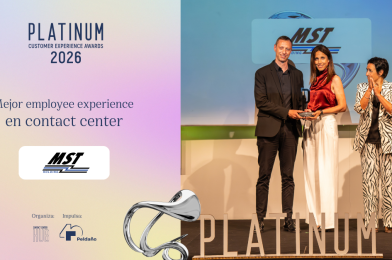
🏆 Silver Award together with Costa Cruises in the category Best Employee Experience

This award is a clear endorsement of our commitment to talent, team wellbeing, and the creation of motivating work environments.

The project developed with Costa Cruises demonstrates that when culture, leadership, innovation, and care for people are aligned, the impact is extraordinary—both in employee satisfaction and in the final customer experience.

This achievement positions MST Holding as a European benchmark in initiatives that enhance employee experience and operational performance.

These recognitions consolidate our position in the industry and underscore the robustness of our service model.

New Units and Sector Specialization

One of the key milestones of the year has been the consolidation of the BBI (Business Banking Innovation) unit, designed to support financial institutions with specialized services that combine sector expertise, secure processes, and highly skilled teams. This unit reflects our commitment to vertical solutions that integrate talent, technology, and deep industry knowledge.

Applied Innovation: AI and Commercial Tools

Throughout 2025, we continued to integrate artificial intelligence solutions that amplify our agents’ capabilities: sales assistants, real-time orchestration, and advanced analytics that optimize outbound campaigns, retention, and customer experience. These tools enable more agile, personalized, and effective interactions, without losing the human component that defines MST Holding.

Talent, Culture, and Internal Recognition

Recognizing talent has been another constant. This year, our internal motivation and positive reinforcement initiatives were externally acknowledged, showing that our organizational culture—based on commitment, collaboration, and excellence—is also valued by the industry.

International Presence and Client Collaboration

We maintained an active presence at major industry forums, both nationally and internationally, showcasing our solutions and gathering key market trends. Projects delivered with our clients have generated tangible improvements in satisfaction, efficiency, and first-contact resolution KPIs, strengthening trusted relationships and creating success stories that can be replicated in new contracts.

Sustainability, Compliance, and Security

Regulatory compliance and data protection have remained non-negotiable pillars. Throughout the year, certifications, controls, and protocols were reinforced (including PCI DSS and GDPR in critical functions), ensuring secure and reliable operations for our clients—often in highly regulated sectors.

Looking Ahead to 2026: Priorities and Purpose

Our purpose remains unchanged: to combine cutting-edge technology and committed talent to deliver memorable customer experiences and achieve sustainable, responsible growth.

Closing the Year

If there is one conclusion to draw as we close the year, it is that MST Holding’s success in 2025 is not the result of a single action, but of the cumulative work of teams, clients, and partners who have embraced innovation with sound judgment. We are grateful for the trust of our clients and collaborators, and we will continue to invest in people, processes, and technology to ensure that 2026 is, once again, a year of excellent service and responsible expansion.

www.mstholding.com

MST Holding and Costa Cruises Win the Silver Award at the ECCCSA: A Recognition of Well-Executed Work and the Power of People

On November 25, we travelled to London with our suitcases full of excitement, expectations, and that unique mix of emotion and nerves you only feel when you’re about to experience a truly special moment. The occasion was none other than the gala of the European Contact Centre & Customer Service Awards (ECCCSA), the most prestigious awards in Europe in the field of customer service and user experience. We knew that being among the finalists was already a huge achievement—a sign that our work, and that of our partners, is making a real difference. But what we didn’t expect was to return home with a Silver Award alongside one of our most cherished partners: Costa Cruises, in the Best Employee Experience category.

This recognition not only celebrates a project but a way of working. It confirms that when companies genuinely invest in people, stronger relationships are built, teams become more committed, and customer experiences become truly memorable. Because there is no excellence in CX without a great Employee Experience behind it.

A Journey with a Clear Destination: Transforming People’s Experience

When we embarked on this journey with Costa Cruises, we had a clear purpose: to create a work environment where every agent felt valued, heard, and supported—both professionally and emotionally. The project was born to strengthen team wellbeing, improve internal processes, and elevate the quality of interactions between the brand and its customers. Over time, this collaboration has become an example of how trust, continuous communication, and a shared vision can transform results and create real impact.

At MST Holding, we’ve spent more than three decades proving that customer service is a people-driven industry, and this award reaffirms that belief. Technology empowers, processes organize—but it is people who inspire, build loyalty, and create lasting relationships.

The Magic of a Project Created By and For People

The Best Employee Experience category recognizes initiatives focused on improving the holistic experience of teams—an enormous challenge in a sector as dynamic, demanding, and ever-changing as the Contact Center industry. Together with Costa Cruises, we developed actions that truly made a difference:

  • Renewed onboarding programs to ensure every new hire felt supported from day one.
  • Dynamic training processes designed to strengthen skills, build confidence, and enhance excellence in customer interactions.
  • Recognition and motivation initiatives—from internal dynamics to personalized messages celebrating both individual and team achievements.
  • Active listening spaces, essential for identifying needs, driving improvements, and fostering an honest and collaborative work climate.
  • Ongoing optimization of tools and workflows, helping agents work more efficiently and fluidly.

The result was a more human, healthier, and more connected ecosystem. A team that not only serves but inspires. That not only solves but creates exceptional experiences. This Silver Award acknowledges that effort and evolution.

A Shared Achievement with Great Partners

This year, we travelled to London with the joy of being nominated in three different categories alongside exceptional partners:

Costa Cruises – Best Employee Experience
Brother Europe International – Best Multilingual Customer Service
Hitachi Energy – Most Effective Management of Peak Demand

Each nomination gave us another reason to celebrate. Because if there’s something that defines MST Holding, it’s our ability to build long-term relationships and work hand-in-hand with brands to achieve their goals. Seeing these collaborations shine on an international stage confirms that we’re moving in the right direction.

However, the award with Costa Cruises carried a particularly emotional meaning—not only for the recognition itself, but for what it represents for us as a company and for the entire team involved in the project.

The jury highlighted the consistency and strength of our approach: thoughtful recruitment, continuous development, deep wellbeing initiatives, and close collaboration with the client. But beyond processes, this recognition celebrates something deeper: a way of understanding our business.

The Power of a United Team

At MST Holding, we know success is never accidental. It is the result of consistent work, collective commitment, and love for what we do. Behind this award are many people: agents, trainers, coordinators, quality leads, operational leaders, tech support teams, HR professionals… And there are also values: humility, respect, effort, closeness, and a deep sense of responsibility.

This recognition belongs to all of them. Because every interaction, every call, every detail counts. And when you work with passion, the results speak for themselves.

A Boost to Keep Growing

Winning Silver alongside Costa Cruises fills us with pride, but it also motivates us to keep innovating, creating, and improving. Employee Experience is a strategic pillar for MST Holding, and this award reinforces our commitment to continuous improvement and to remaining a benchmark in people management and the development of positive work environments.

Our goal is not only to deliver excellent service, but to create experiences that leave a mark—both on customers and on the teams who make them possible.

A Recognition That Goes Beyond the Award

This achievement also reflects something essential: the Contact Center industry is evolving towards a model where people are once again at the heart of everything. Where emotional connection, wellbeing, internal support, and the impact of a strong employee experience on customer satisfaction are truly valued.

In an increasingly automated, digital, and fast-paced sector, this award proves that humanity is still the engine of excellence.

Additionally, this Silver Award joins the Bronze Award won in 2024 for Most Effective Strategic Transformation with our client Brother, strengthening an already solid track record of continuous improvement, excellence, and long-term vision in our CX and BPO services.

Thank You, Costa Cruises

We cannot close this article without thanking Costa Cruises for their trust, shared vision, and ongoing commitment to the value of people. Working together has been—and continues to be—a privilege. And this award is proof that when two teams row in the same direction, extraordinary things happen.

What Comes Next

At MST Holding, we will continue doing what we do best: supporting, improving, listening, and transforming. This award is a milestone, but also a starting point for new projects, new goals, and new success stories.

The night in London was unforgettable, but the best part is that it’s just one step in a journey that continues—and promises much more.

And of course… thank you all

Thank you to everyone who is part of MST Holding.
Thank you to those who place their trust in us.
Thank you to those who accompany us in every new challenge.
Thank you to those who celebrate our successes.

This award belongs to you too.
Because when work is done with passion, humility, and teamwork…
great things eventually happen.
And this award with Costa Cruises is proof of that.

www.mstholding.com

We share MST Holding’s vision on the evolution from BPO to KPO at Expo Relación Cliente 2025

During Expo Relación Cliente 2025, organized by IFAES, the round table “From BPO to KPO (Knowledge Process Outsourcing) to become an Experience Partner” took place.
Among the speakers, we would like to highlight the participation of Jessica Barceló, CEO of MST Holding, who offered an inspiring perspective on how companies in the sector are evolving toward models based on knowledge, technology, and human purpose.

“Change is not only operational, it is cultural.”

Jessica explained how MST Holding has evolved from a people-intensive organization to a company where technology, analytics, and specialized talent coexist to drive clients’ transformation.

“The creation of an ecosystem where talent, technology, and analytics integrate to enhance our clients’ capabilities is the true core of change” she stated.
For Barceló, the key lies in consistency:
“Trust is earned through transparency and coherence. At MST, we work around three pillars: consistency in resources, in technology, and in delivery.”

From Data to Value
The executive shared examples of how MST is applying its own artificial intelligence models in sectors such as pharmaceuticals and banking, achieving performance improvements of up to 40%.
“Our advantage is that the technology is proprietary, allowing us to ensure traceability, reliability, and regulatory compliance,” she explained.
Beyond efficiency, the goal is to turn data into useful knowledge — capable of enabling intelligent decisions and improving customer experience.

Technology with Empathy
Jessica emphasized that technology does not replace human value but amplifies it:
“Empathy, emotional understanding of the customer, and context interpretation will always be irreplaceable.”
For this reason, MST promotes the role of the Experience Consultant, a profile that combines analytical thinking and human sensitivity to provide strategic value in every interaction.

Spain, a European KPO benchmark
In the final part of the session, Barceló highlighted Spain’s role as a hub of knowledge and trust within the KPO landscape.
“We have a culture of compliance, economic stability, and well-prepared talent. But we must continue investing in technological and digital training.”
She advocated for the importance of reskilling and collaboration between companies, universities, and public institutions to face the future with confidence.

Towards a Shared Knowledge Model
Jessica concluded her speech with a statement that perfectly summarizes the essence of this new paradigm:
“The real change is not in what we do, but in how we do it. From providers to partners. From tasks to value. From execution to knowledge.”

A Final Reflection
The round table made it clear that the sector has entered a new stage: one of shared knowledge, collaboration, and applied intelligence.
The contributions from the various speakers — from Ilunion’s operational expertise to Zelenza’s technological vision or Atento’s strategic perspective — all agreed on one essential point: the evolution from BPO to KPO is not a trend, but a structural transformation redefining how companies create value alongside their clients.
The debate, ultimately, reflected the maturity of the industry: a sector that no longer just executes, but thinks, analyzes, co-creates, and supports. And that evolution — as demonstrated at Expo Relación Cliente 2025 — is already underway.

www.mstholding.com

Exit mobile version