The approval of the new Customer Service Law (SAC) is marking a turning point in how organizations manage their customer relationships. Beyond regulatory compliance, this law introduces a new framework that promotes service professionalization, operational transparency, and the need to measure quality in an objective way.
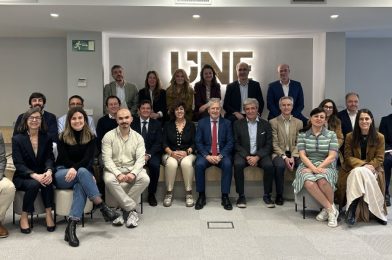
In this context, MST has reinforced its commitment to continuous improvement by actively participating in the forums where these new standards are being defined. As such, we are part of the UNE (Spanish Association for Standardization) Standardization Committee Working Group, promoted together with AEERC (Spanish Association of Customer Relationship Experts), which will be responsible for developing the standard that will enable auditing compliance with the SAC Law.
This working group brings together some of the leading companies in the sector, with the aim of establishing a common framework that ensures consistency, rigor, and practical applicability of the regulation. The goal is not only to define theoretical requirements, but to build a standard that can be effectively implemented in day-to-day customer service operations.
The committee plays a key role in this process: translating the principles of the law into clear, measurable, and auditable operational criteria. To achieve this, work is being carried out across three main areas that will be critical in the coming years.
First, defining the technical criteria and requirements that organizations must meet. This includes establishing the conditions that customer service operations must fulfill in terms of structure, capabilities, processes, and technology. Not all companies start from the same level of maturity, so the standard must be demanding enough to raise the bar across the sector, while remaining realistic to allow for progressive adoption.
Second, designing customer service evaluation systems. One of the sector’s longstanding challenges has been the lack of homogeneous models for measuring quality. The new standard aims to move towards more structured evaluation frameworks that combine operational indicators, customer experience metrics, and internal control mechanisms. This will enable a shift from subjective or one-off assessments to continuous and comparable evaluation systems.
Finally, the committee is defining which aspects will be subject to audit and under which metrics they will be assessed. This is particularly relevant, as it introduces an external verification component that will require organizations to objectively demonstrate the quality level of their services. Audits will no longer focus solely on formal compliance but will also incorporate elements such as operational efficiency, process traceability, and consistency in customer experience.
The new standard represents an opportunity to address existing inefficiencies from a structural perspective. It is not just about meeting SLAs or adding new service channels, but about redesigning operating models to ensure they are sustainable, measurable, and aligned with customer expectations.
Moreover, participating in this process allows us to anticipate upcoming regulatory frameworks and prepare our clients for their implementation. In an environment where regulation is evolving rapidly, the ability to anticipate becomes a key differentiator. It is not enough to react once the regulation comes into force; organizations must understand where the model is heading and adapt their operations accordingly.
Another key aspect introduced by this new scenario is the importance of certifiable quality. Organizations will not only need to deliver good service, but also demonstrate it through metrics, audits, and recognized standards. This represents a significant shift in how quality is managed, moving from an internal focus to becoming a trust factor for clients, regulators, and the market.
In this regard, the development of common standards will also contribute to greater transparency across the sector. Having homogeneous criteria will enable benchmarking, identification of best practices, and an overall improvement in customer service performance.
At MST, we believe this is the path towards a more mature and sustainable model—one where customer experience does not rely on isolated initiatives, but on solid structures, well-defined processes, and data-driven management.
We will continue working to ensure that regulation is not just an obligation, but a lever for transformation—an opportunity to drive sector professionalization, improve operational efficiency, and deliver a consistent, measurable customer experience aligned with best practices.