
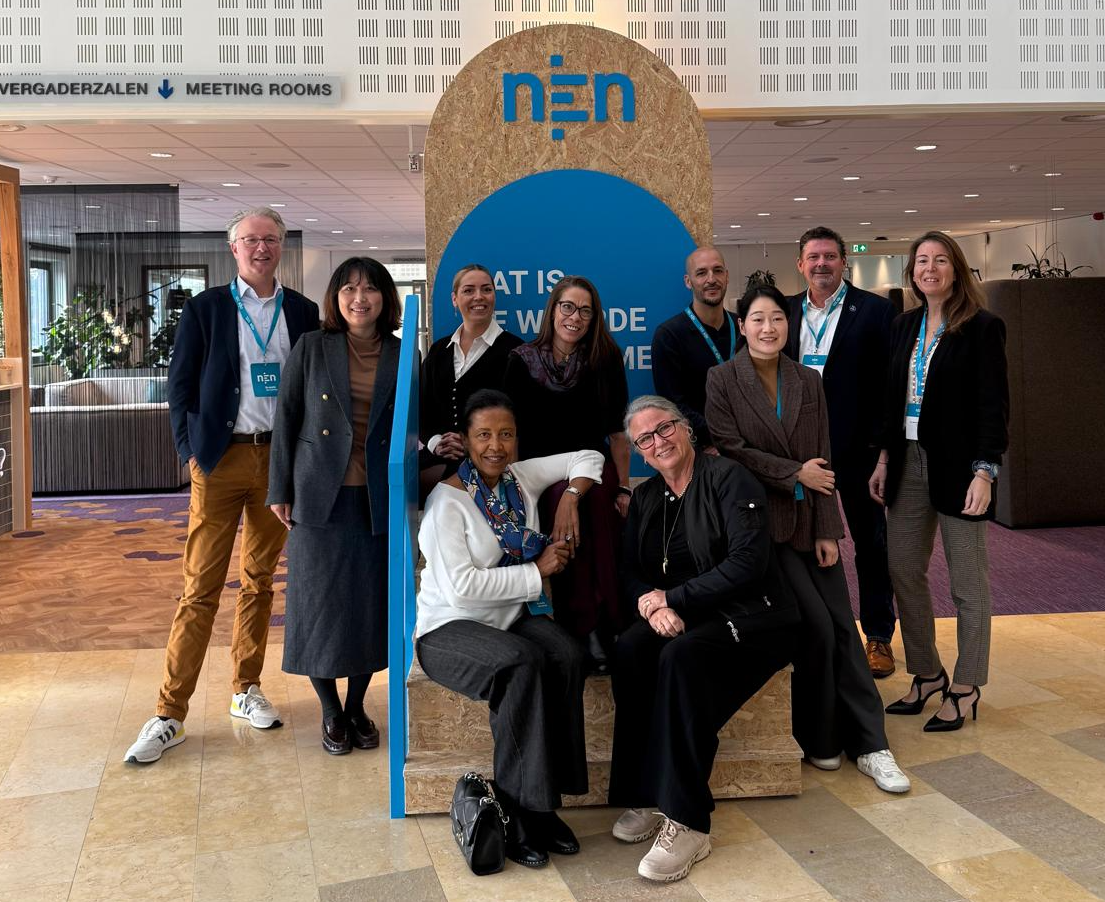
When a company places its customer service in the hands of a contact centre, whether an in-house team or an external provider, it needs some objective way of knowing whether the service lives up to its expectations. That benchmark has existed since 2017 under the name ISO 18295, the international standard that sets out quality requirements for customer contact centres. Almost a decade after it was first published, the standard is being revised to reflect how much the sector has changed, and Jessica Barceló, CEO of MST Holding, is taking part in that process.
What ISO 18295 is and what it covers
Published by the International Organization for Standardization (ISO), the ISO 18295 series brings together the international requirements for delivering contact centre services reliably and for ensuring that the companies that hire them manage them properly. What sets it apart is that it does not focus solely on the provider but on both sides of the relationship, which is why it is divided into two complementary documents.
ISO 18295-1: requirements for contact centres
The first part applies to customer contact centres, whether they are run in-house or the service is outsourced. It covers operational organisation, staff competencies, the handling of interactions, quality monitoring and performance indicators, in other words everything that shapes how customers are looked after day to day.
ISO 18295-2: requirements for the companies that use the service
The second part is aimed at the organisations that use these services and sets out their responsibilities, as well as how they should work with their provider. It starts from an idea familiar to anyone who has outsourced their customer service: the final quality of the service depends not only on whoever delivers it, but also on the company that commissions it.
Why the standard is being revised
The contact centre of 2017 bears little resemblance to today’s. Since then, omnichannel service has become the norm, new digital channels have emerged, and automation and artificial intelligence have made their way firmly into customer service, changing both service models and what consumers expect from them.
To respond to this new reality, technical committee ISO/TC 351, which brings together national standards bodies from more than thirty countries, has launched a revision of the series through its working group ISO/TC 351/WG 1. The aim is to ensure the requirements can be applied to any channel, technology or operating model without losing the purpose the standard was created for: a consistent, reliable service built around the customer’s needs.
Artificial intelligence in the contact centre: how to measure quality
One of the key questions in the revision is how to deliver, monitor and assess the service when human agents, interactions handled by automated systems and models that combine the two all work side by side. Virtual assistants, interaction analytics and automation tools make it possible to work more efficiently, personalise the experience and respond faster, but they also force us to rethink what quality customer service means and how to check that it is actually being delivered.
It is worth making clear, however, that the revision is not meant to turn ISO 18295 into a standard on artificial intelligence. The goal is for the contact centre requirements to remain valid whatever technology is used, and for the standard to fit alongside other, more specialised international standards without duplicating what they already cover.
What a company hiring a contact centre can learn from the standard
Although the new edition is still some way off, the current structure of ISO 18295 already offers useful guidance for anyone considering outsourcing their customer service or reviewing their relationship with a provider. The areas the standard covers work as a list of sensible questions to ask: how the service is organised, what training and skills the teams have, how interactions are handled on each channel, how quality is monitored and which indicators are used to measure results.
Today another question is becoming increasingly important: how quality is guaranteed in automated interactions, not only in those handled by a person. And, following the logic of the second part of the standard, it is also worth companies reviewing their own role, because a well-structured relationship with the provider is as much a part of quality as the work of the agents themselves.
MST Holding in the international working group
Jessica Barceló, CEO of MST Holding, is one of the experts taking part in the revision, bringing to it the group’s experience in delivering, managing and transforming customer service operations. In her words, “customer service models are changing profoundly with the arrival of new channels, automation and artificial intelligence, but the principles of quality, reliability and customer focus must remain”.
At the sessions held in Delft (the Netherlands) in October 2026, the experts made progress on the revision of ISO 18295-1, and the next stage will focus on ISO 18295-2 and on the relationship between companies and their providers. The process is still at the technical stage, so the proposals will have to go through the international consensus and approval procedures before being included in a new edition of the standard. At MST we will keep a close eye on how it develops and share the news here.